Duplex-GS: Proxy-Guided Weighted Blending for Real-Time Order-Independent Gaussian Splatting

Weihang Liu1,2, Yuke Li1, Yuxuan Li1, Jingyi Yu1, Xin Lou1,2,
1ShanghaiTech University, 2GGU Technology Co., Ltd

Overview

3D Gaussian Splatting (3DGS) achieves photorealistic rendering but requires global sorting for alpha-blending, causing noticeable ``popping" artifacts and hindering deployment on edge devices. While sort-free Order-Independent Transparency (OIT) methods circumvent sorting, they introduce ``transparency" artifacts and suffer from inefficiency due to the absence of physical constraints.

To address these limitations, we present Duplex-GS, a dual-hierarchy framework leveraging proxy-guided spatial organization and a novel hybrid renderer that combines $\alpha$-blending with reformulated Weighted-Sum Rendering (WSR). We introduce explicit ellipsoidal cell proxies to encapsulate local Gaussians, which enables efficient proxy-level rasterization. This strategy drastically reduces the overhead associated with global sorting. Furthermore, we propose a physically grounded WSR scheme with cell-level early termination, which restores the physical constraints absent in prior OIT-based 3DGS methods, effectively eliminating both popping and transparency artifacts. Extensive experiments on diverse real-world benchmarks demonstrate the effectiveness of the OIT-based paradigm for 3DGS, enabled by a practical dual-hierarchy implementation. Quantitatively, our method delivers high-fidelity real-time rendering, outperforming prior OIT-based 3DGS methods by x1.5~x4 in speed, while reducing radix-sort cost by 29.8%~86.9% compared with conventional alpha-blending without compromising visual quality.
Video

Method Overview

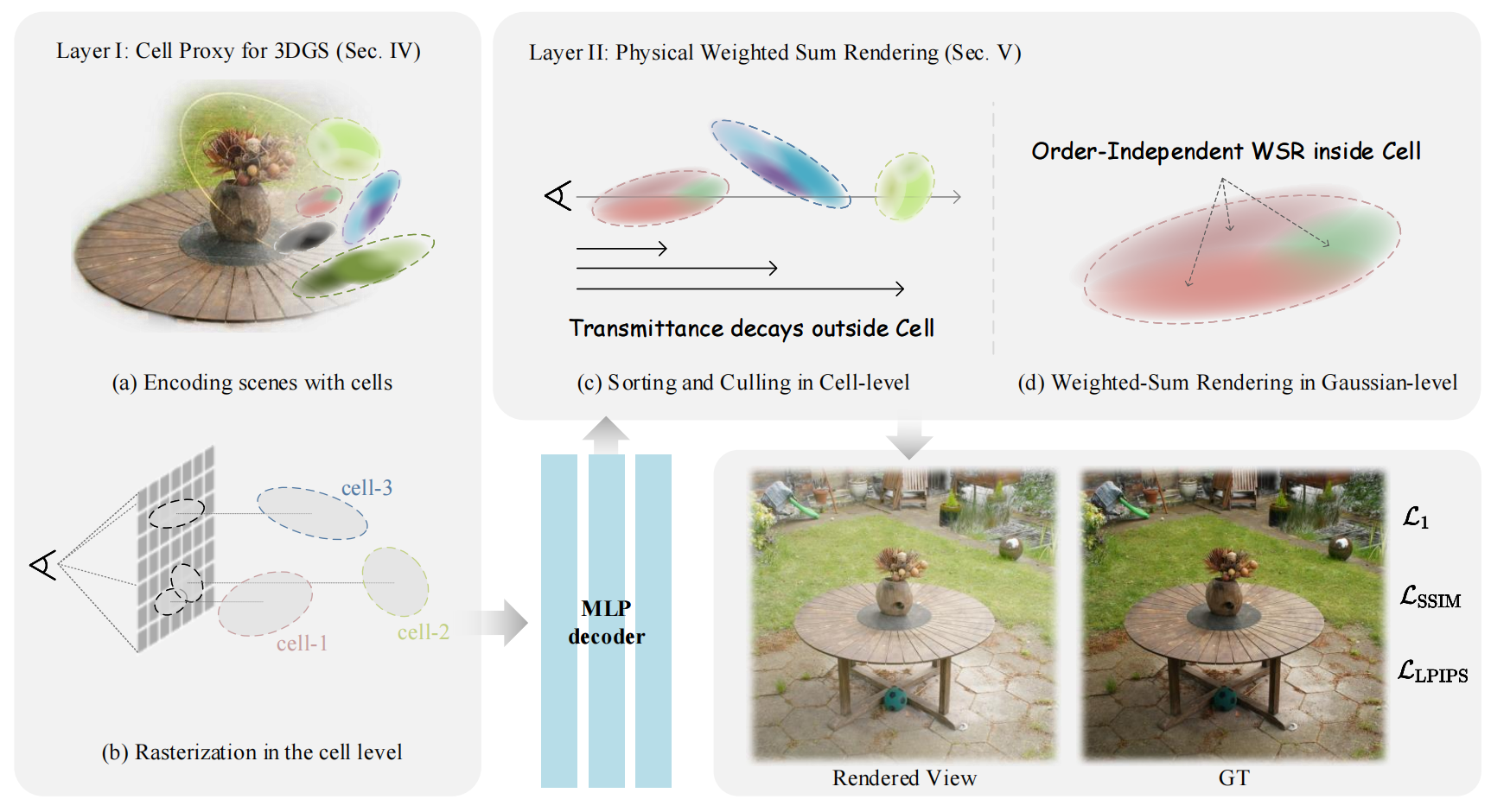
Illustration of the proposed Duplex-GS pipeline.. (Layer I) Ellipsoidal cells act as proxies to spatially organize local Gaussians. This structure enables efficient cell-level rasterization, significantly reducing the overhead of view-adaptive global sorting. (Layer II) Intersected cells are decoded into Gaussians and blended with the proposed physically grounded WSR. The final color is computed by first determining weights via sorting in cell-level, then aggregating the Gaussians inside each cell in an order-independent WSR manner.

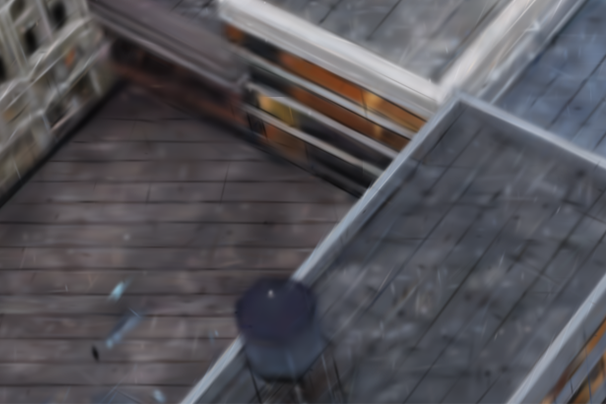
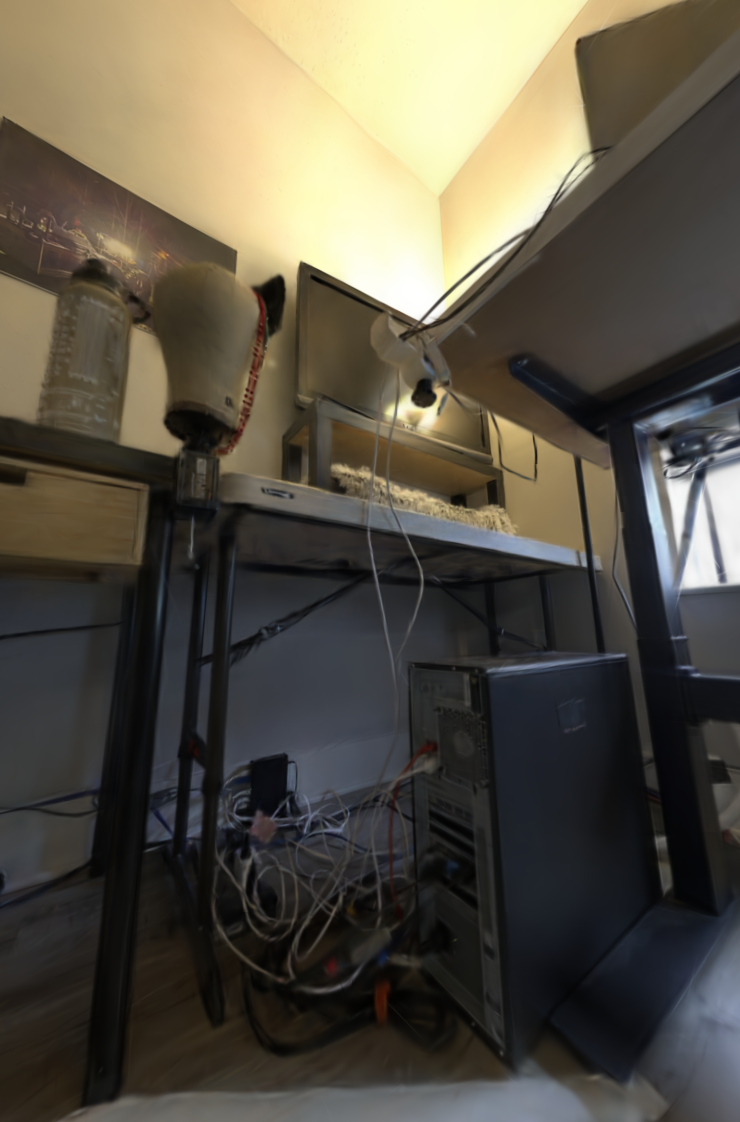
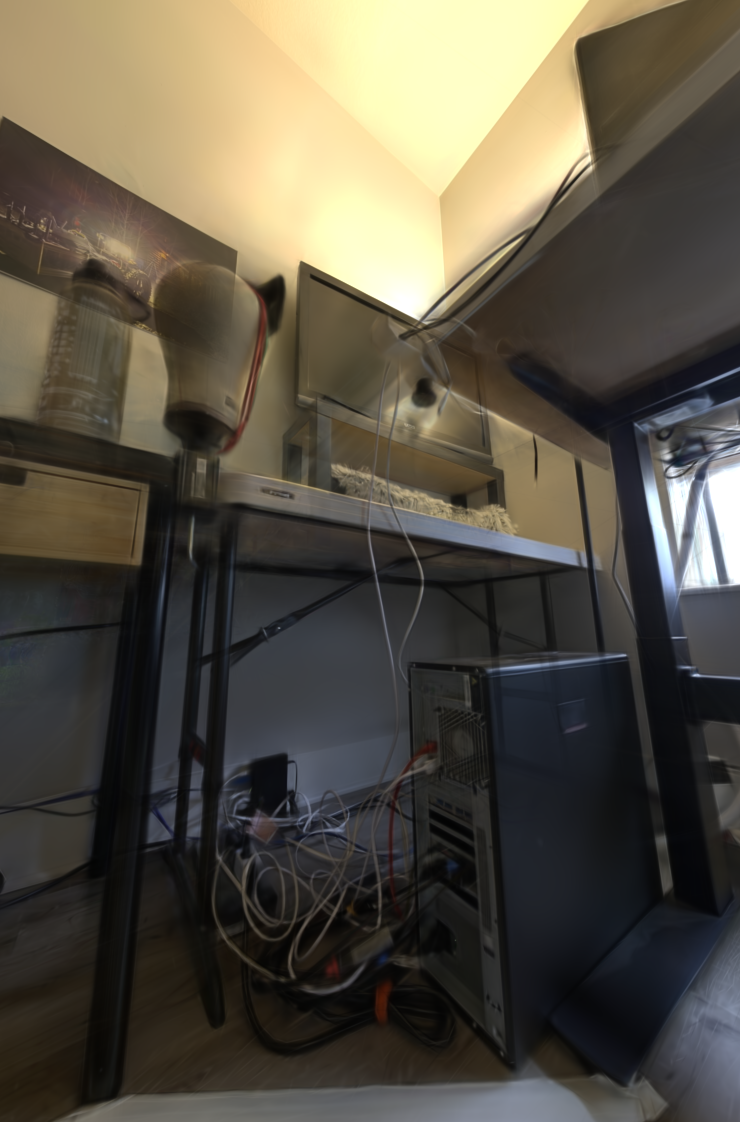
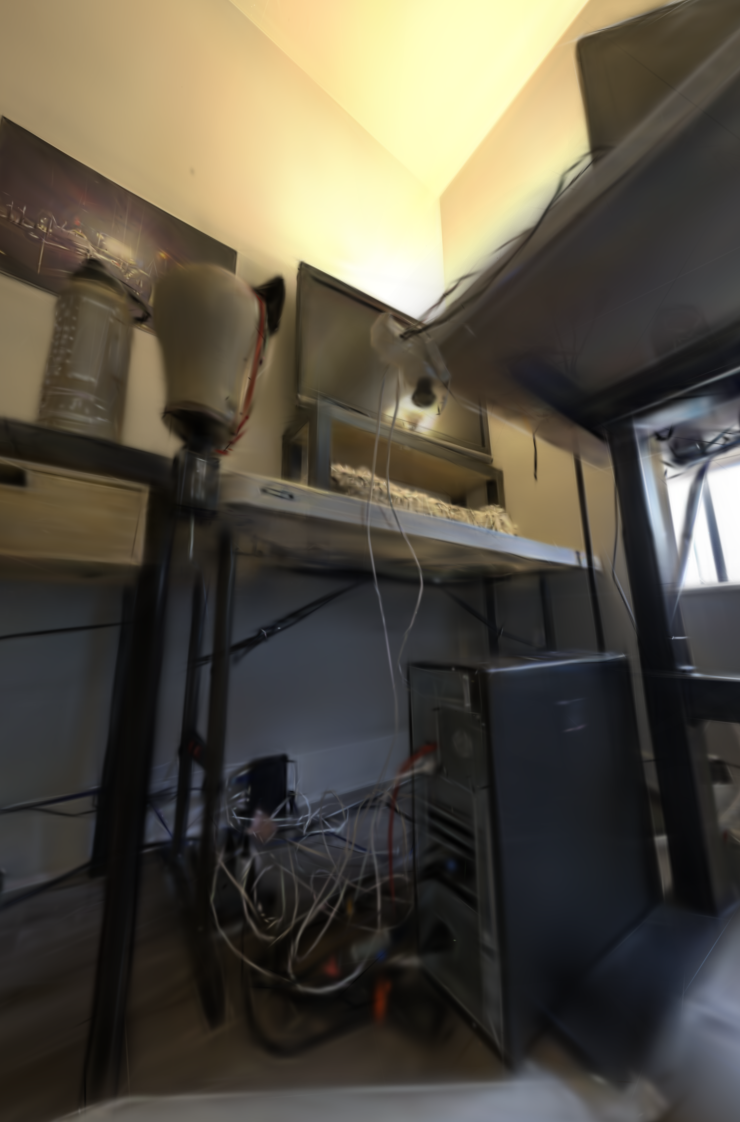
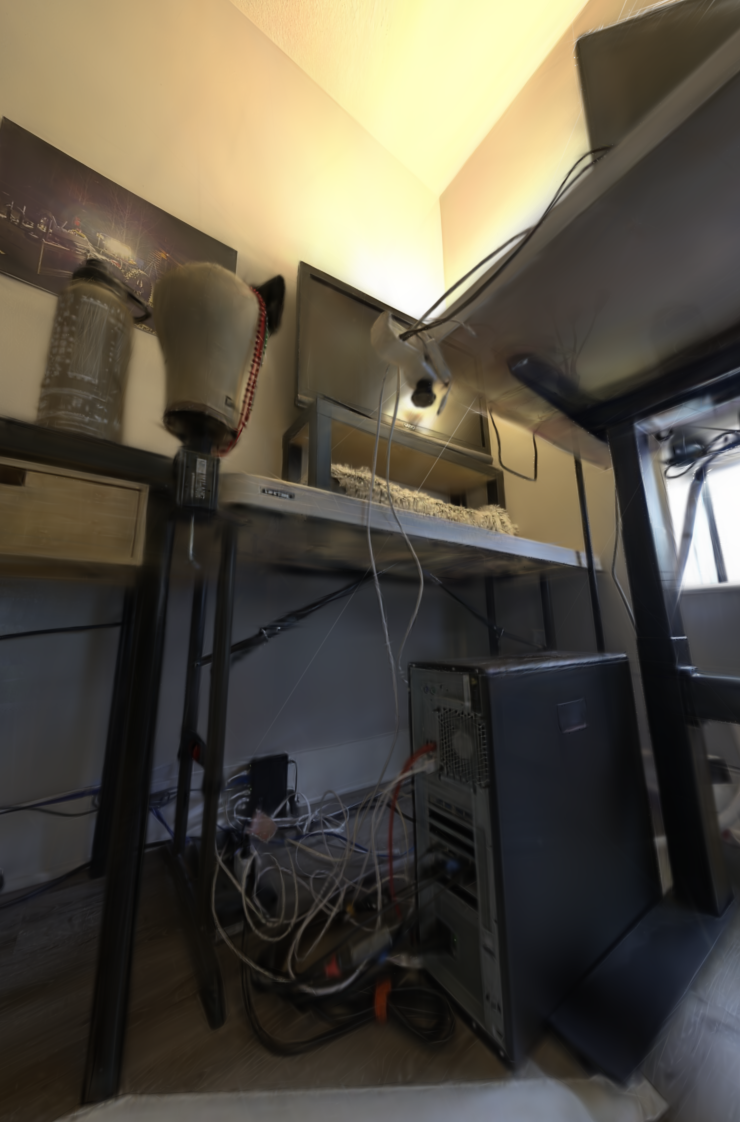
Transparency Artifacts removal

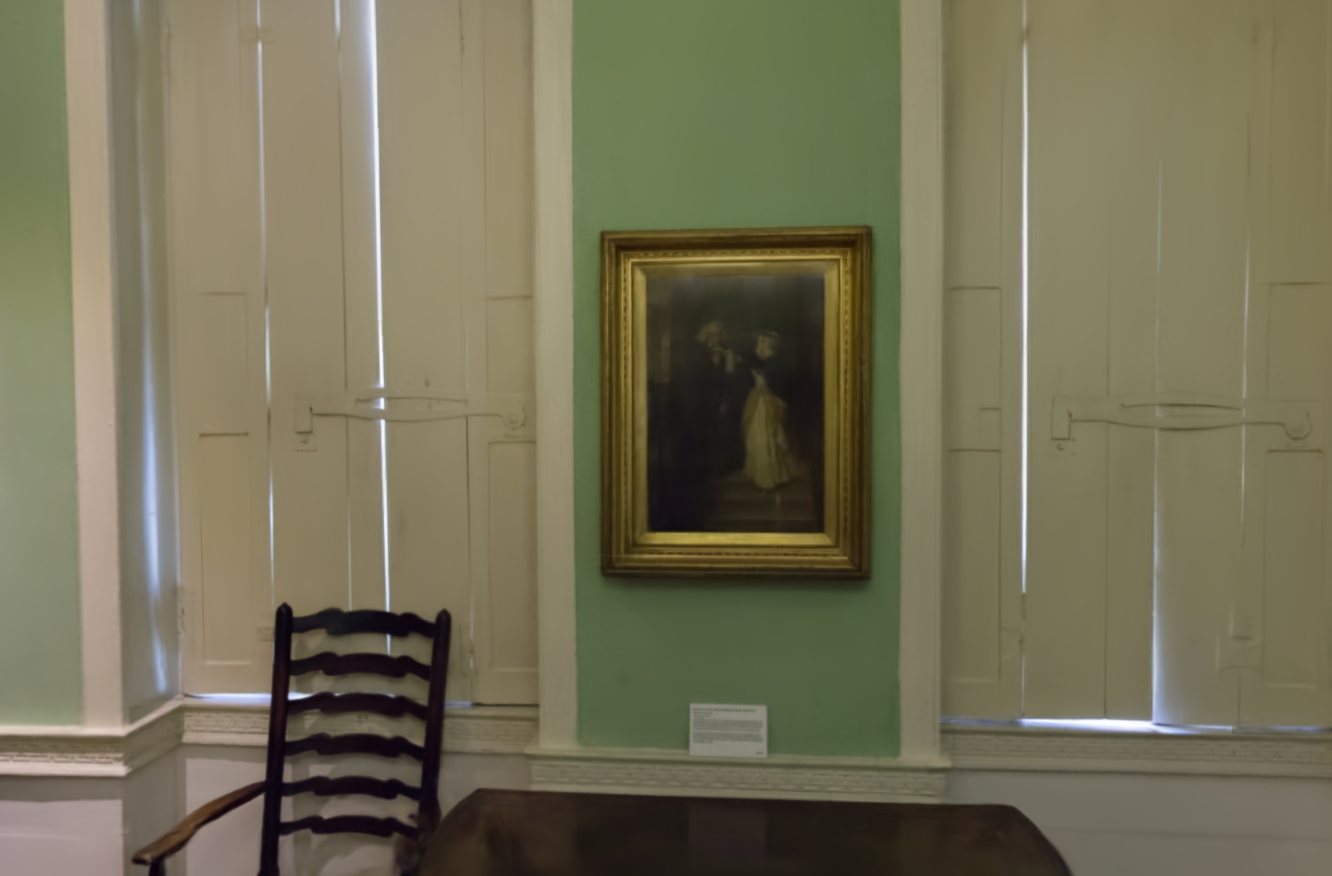
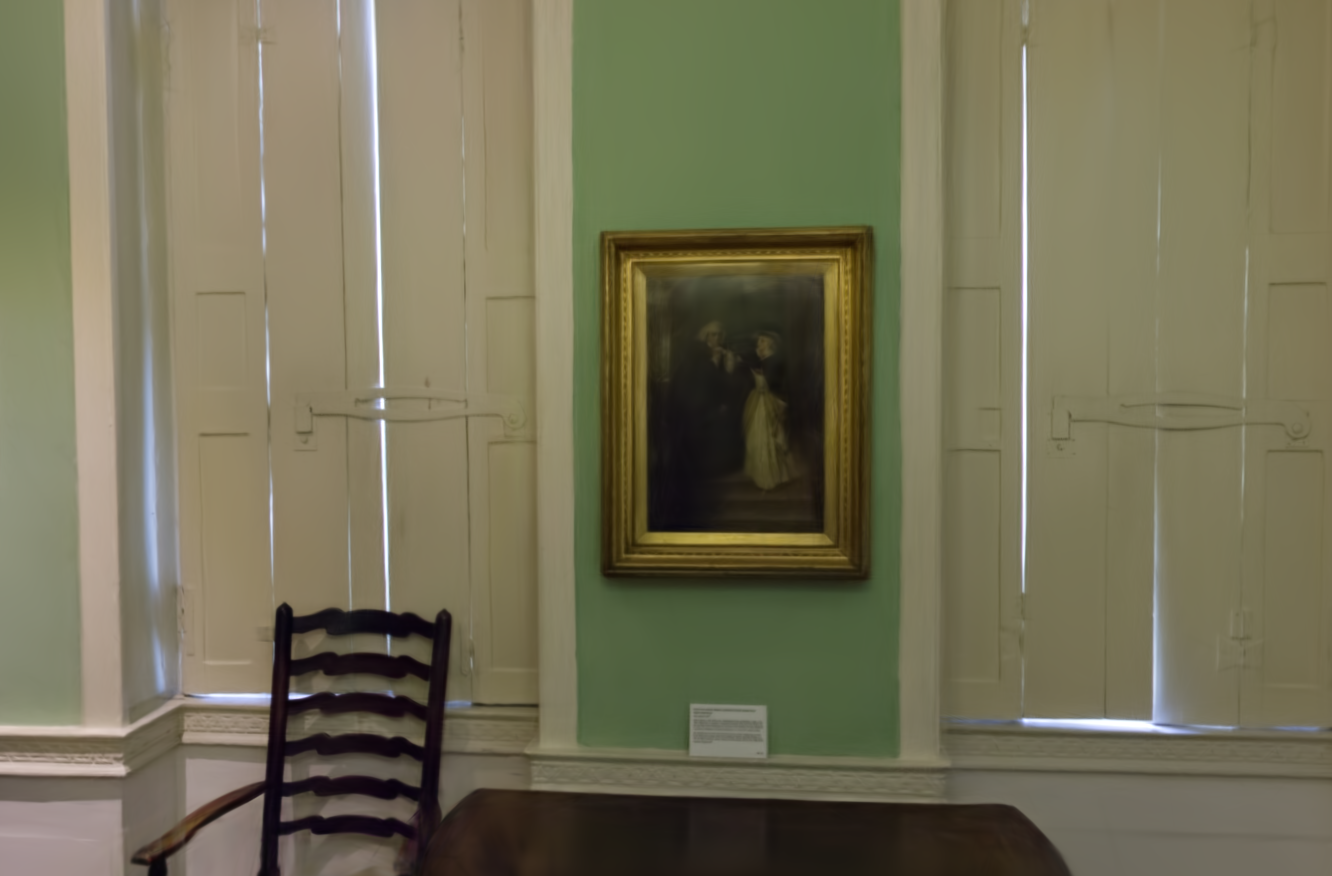
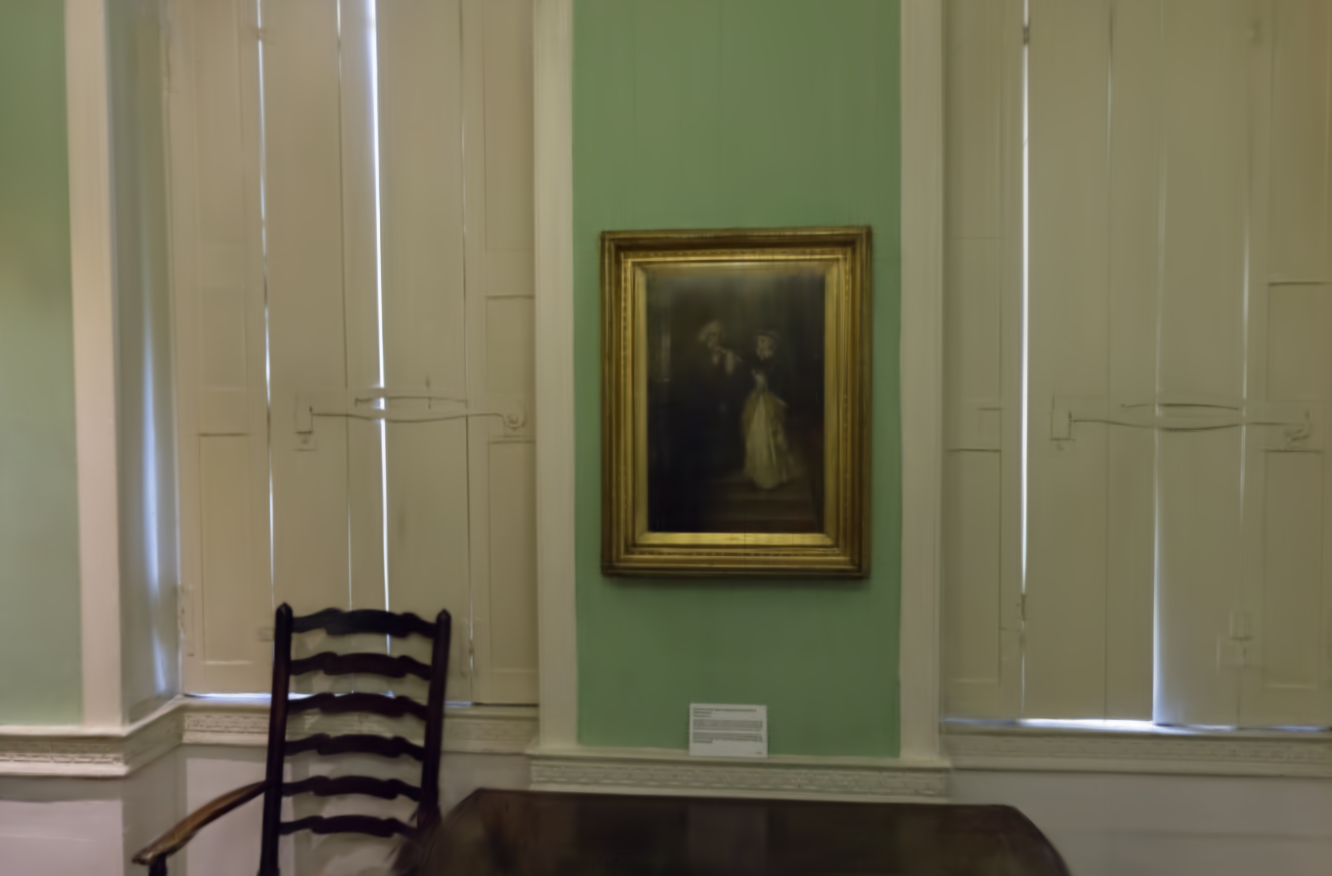
Ours
Sort-Free GS [ICLR 2025]
Ours
Sort-Free GS [ICLR 2025]
Ours
Sort-Free GS [ICLR 2025]
Ours
Sort-Free GS [ICLR 2025]

Popping Artifacts removal

⚠ Refresh the page if the videos are not synchronized.

Video Comparison 1

Drag the sliders to compare different methods side by side. Compare 3DGS [SIGGRAPH'23], Scaffold-GS [CVPR'24], Octree-GS [TPAMI'25] and our method.
⚠ Refresh the page if the videos are not synchronized.

Video Comparison 2

Compare Sort-Free GS [ICLR'25], Octree-GS (Officially pretrained model) [TPAMI'25], and our method.
⚠ Refresh the page if the videos are not synchronized.

Additional Qualitative Results-1

Comparisons from the Mip-NeRF360 dataset.

Additional Qualitative Results-2

Comparisons from the VR-NeRF dataset.

Additional Qualitative Results-3

Results on DrJohnson, Playroom and MatrixCity scenes.

BibTeX

@misc{liu2025duplexGS,
  author    = {Weihang Liu and Yuke Li and Yuxuan Li and Jingyi Yu and Xin Lou},
  title     = {{Duplex-GS: Proxy-Guided Weighted Blending for Real-Time Order-Independent Gaussian Splatting}},
  year      ={2025}, 
  eprint    ={2508.03180}, 
  archivePrefix={arXiv}, 
  primaryClass={cs.CV},
}